A door-access battery is sized in ampere-hours of continuous current, not in milliamps of sleep, and it is released by a fire signal regardless of how full it is. Paper B provides the engineering method for reconciling those facts: an itemised load table built from real lock and reader currents, a derating waterfall that converts raw demand into nameplate capacity, a chemistry comparison on the axes of continuous hold and egress coordination, and the pack, charger and supervision architecture that keeps a multi-door site both secure and code-compliant through an outage.
Access sizing is unforgiving of omitted loads, so the load table must enumerate every device on the backup rail. List each maglock or shear lock with its holding current at the system voltage, each electric strike with both holding and inrush current, every controller and reader, each REX loop, and the intercom or video station with its standby and talk currents. Multiply continuous loads by the full required standby period and transactional loads by their expected frequency and duration. The continuous locks will dominate; the intercom and strikes set the peak-current requirement.
Do not forget that fail-safe maglocks draw their holding current precisely when they are locked - which, for an exterior or lobby door, is almost always. A duty-cycle assumption that a lock is 'only energised sometimes' is simply wrong for a fail-safe installation and will undersize the pack.
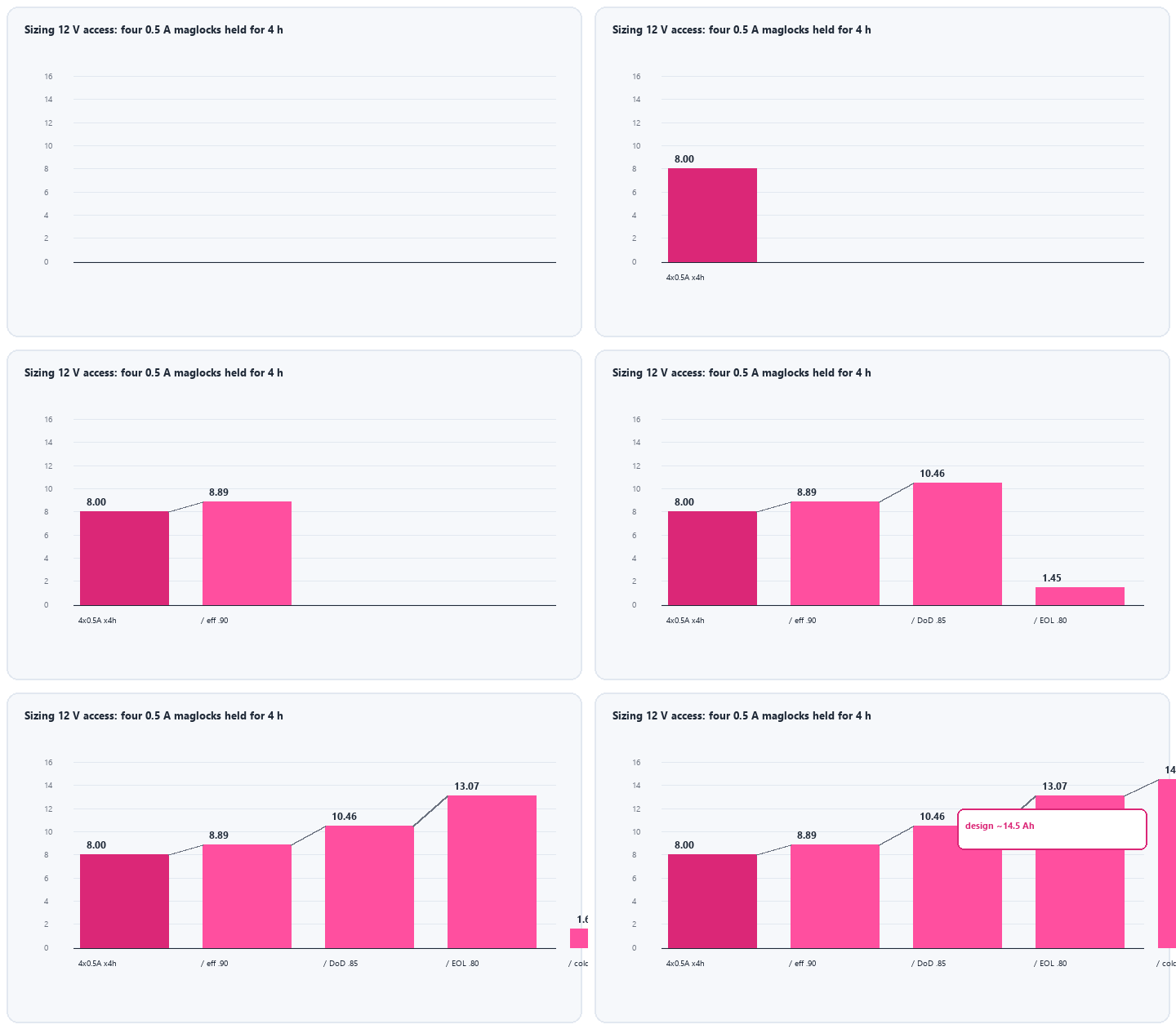
The animated waterfall works a representative 12 V design: four maglocks at 0.5 A each present a 2 A continuous load, and four hours of UL 294 Level II standby demand 8 Ah before any margin. Divide by conversion efficiency of about 0.90, limit usable depth of discharge to roughly 0.85, reserve an end-of-life factor near 0.80 and add a cold-vestibule factor around 0.9, and the nameplate requirement climbs past 14 Ah. As with the alarm-panel method, the installed pack is materially larger than the raw energy number - and sites specifying longer standby, or more doors, scale the same calculation upward.
The same arithmetic exposes a sales-engineering trap: quoting a battery's nameplate ampere-hours against the raw continuous load ignores efficiency, depth of discharge, temperature and years of fade, and the door that passed its commissioning test begins failing its standby test a few years later. The waterfall is what makes the four-hour promise durable.
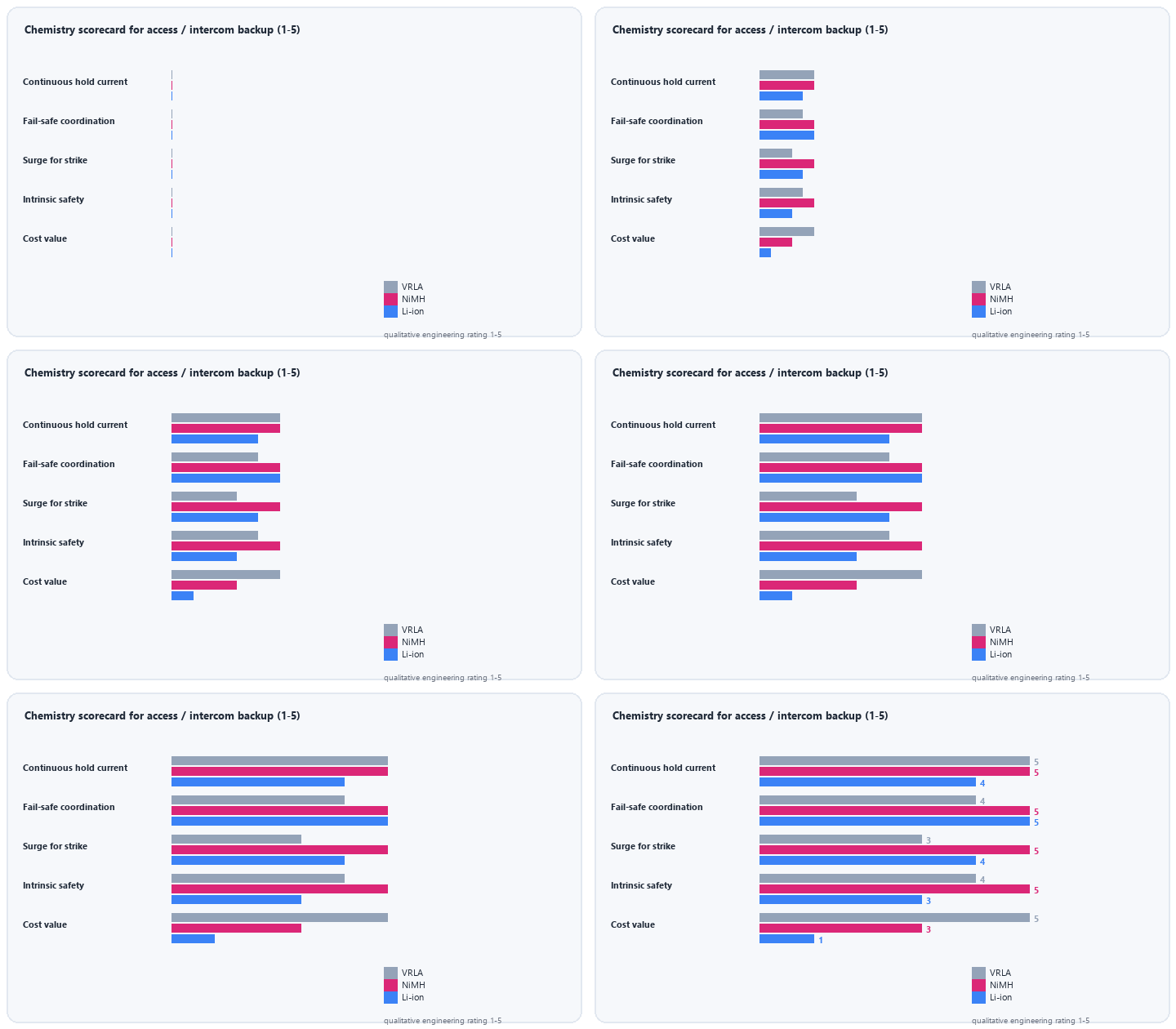
The animated scorecard rates lead-acid, NiMH and lithium on five door-specific axes: sustaining a continuous holding current, coordination with fail-safe release, supplying strike surge, intrinsic safety and cost value. Lead-acid holds a continuous rail cheaply but is heavy and degrades under perpetual float and cold; lithium is light and strong but needs protection circuitry and carries transport overhead. NiMH rates highly across the board: a flat, low-impedance plateau holds the lock rail steadily and supplies strike inrush without sag, the aqueous chemistry is abuse-tolerant, and the cost per delivered standby-hour is competitive in the compact-to-mid sizes door power supplies use.
Crucially, chemistry does not change the egress rule. Whatever the battery, the fire-alarm tie-in must be able to drop the maglocks - typically through a supervised control relay that interrupts lock power on a fire signal, independent of whether backup is present. The battery keeps doors secure through a plain outage; the fire interface guarantees they release when evacuation requires.
Most locks are offered in 12 V and 24 V versions, and the choice matters to the battery. A 24 V lock draws half the current of its 12 V twin for the same holding power, which halves I-squared-R losses in field wiring and reduces the voltage drop that can otherwise cause a distant maglock to chatter or drop below holding force. A NiMH string is built to the chosen rail - twenty cells for 24 V, ten for 12 V - with enough taps or regulation to keep the rail inside the lock's tolerance from the freshly charged voltage down to the end-of-discharge knee.
Rail stability under the strike spike is the second architecture decision. A strike inrush can momentarily pull the rail; a low-impedance matched string, a modest bulk capacitor and, where needed, separate fused outputs for lock and strike keep the controller and readers from browning out when a lock is released. Dedicated access power supplies commonly fuse each output with a resettable PTC so one faulted door cannot drag down the whole backup rail.
As in every standby product, the access charger runs for the life of the system and therefore sets battery life. A maintenance current at or below C/20, or a temperature-compensated float, holds the string ready without overcharge, with thermistor cut-back in a warm cabinet; the charger must also restore the required standby capacity within the supply's specified recharge window after an outage. Supervision is equally important: a graded access supply should monitor battery presence and health and signal a trouble condition if the pack is missing, weak or disconnected, rather than discovering the fact at the next outage.
The fire-release interface deserves explicit engineering. It should be a normally-secure, supervised path that drops lock power on a fire-alarm signal or on loss of the fire interface itself, and it must operate whether the system is on mains or battery. REX sensors and crash bars remain hard-wired and independent, so no single battery or controller fault can trap an occupant.
For a multi-door site the pack architecture should scale cleanly: a defined, replaceable pack per power supply, keyed and polarity-protected connectors, capacity labels stating the door count and standby period supported, and matched welded cells for vibration and reliability. Larger lobbies and perimeter gates move to C and sub-C cells for capacity and surge capability; smaller single-door controllers use AA strings. A consistent, documented cell supplier keeps matched-lot quality repeatable and puts IEC 61951-2 performance, IEC 62133-1 safety and UN 38.3 transport evidence behind every installed door.
Paper C completes the method with the certification and field-test trail that demonstrates the standby period, the fail-safe fire release and the cell safety evidence to an inspector or authority having jurisdiction.
Weijiang Power builds scalable NiMH backup packs for access-control and door-entry OEMs: 12/24 V welded strings for single readers to multi-door lobbies, low-impedance cells for stable maglock rails and strike inrush, designs sized with an end-of-life and cold-temperature margin to clear UL 294 standby, and IEC 61951-2, IEC 62133-1 and UN 38.3 documentation. Send your door schedule, lock currents and required standby hours and we will return a sized pack and a derating calculation that preserves fail-safe egress.


