Two documents do most of the work of moving a consumer nickel-metal hydride cell across borders and onto a European shelf: the IEC 62133-1 nickel-system safety standard, and the transport rules that - unlike lithium - treat NiMH batteries as not restricted for air carriage when basic conditions are met. This certification paper explains the test scope of IEC 62133-1 and its 2026 revision, walks through the IATA Special Provision A199 / UN 3496 basis for the favourable air-transport status, and assembles the complete mark and label set. It is the practical compliance map for a consumer NiMH line sold internationally.
Since the 2017 split, IEC 62133 exists in two parts: Part 1 for nickel systems (NiMH and NiCd) and Part 2 for lithium systems. A surprising number of consumer dossiers cite the wrong part, so the first certification discipline is to build the NiMH safety case on IEC 62133-1. The standard specifies requirements and tests for safe operation under intended use and reasonably foreseeable misuse, covering electrical, mechanical and thermal abuse cases appropriate to sealed nickel cells. A new edition, IEC 62133-1:2026, cancels and replaces the 2017 first edition with streamlined terminology, quantified test conditions and refined illustrations - a supplier should confirm which edition a target market or retailer currently expects and transition test reports accordingly.
The nickel-system programme exercises the cell and battery against the failures that matter for aqueous chemistry: controlled charge and discharge behaviour including overcharge and forced over-discharge, external short circuit at ambient and elevated temperature, free-fall and mechanical shock/crush, thermal abuse at high temperature, and for multi-cell batteries the handling of cell imbalance and reverse-connection scenarios. Passing means no fire or rupture under the defined criteria. These tests validate the pack-engineering choices of Paper B - venting, PTC, matching and cut-off - and their results, with the cell's IEC 61951-2 performance data, form the technical heart of the CE conformity file.
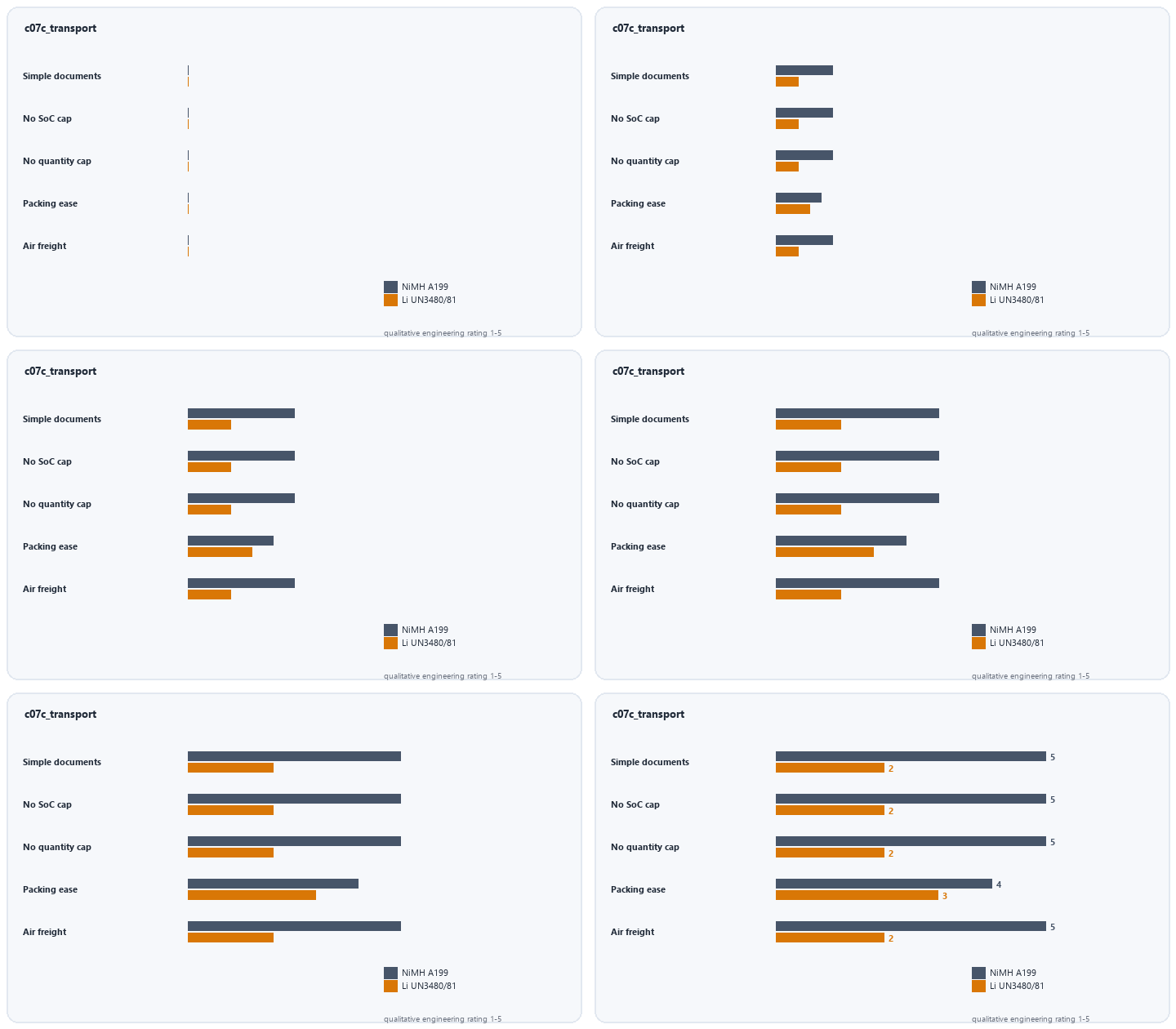
This is a commercially valuable and frequently misunderstood point. Nickel-metal hydride batteries are identified in the dangerous-goods framework under UN 3496 ('Batteries, nickel-metal hydride'), and ICAO/IATA Special Provision A199 confirms that, provided basic safety controls are met - batteries are protected against short circuit and accidental activation, and are of a type proven to meet designated safety-test requirements - NiMH cells and batteries, and equipment containing or powered by them, are 'not restricted' for air transport. Contrast this with lithium cells under UN 3480/3481, which carry state-of-charge, labelling, declaration and quantity limits. For an importer air-freighting replenishment stock or shipping emergency orders, not-restricted status means simpler documentation, fewer delays and lower logistics cost - a concrete, quotable advantage.
The favourable status is conditional, not unconditional. Packing must prevent short circuits - terminals recessed, cells in retail blisters or individual bags where loose, no conductive objects in the same inner packaging - and prevent accidental activation of equipment. The cells must be of a type meeting the safety requirements (the IEC 62133-1 evidence). Damaged, defective or recalled batteries never qualify for the relief. A responsible supplier documents packing guidance for customers so that the logistics advantage is not lost through an incorrectly packed carton, and keeps the safety-test evidence that the provision presumes.
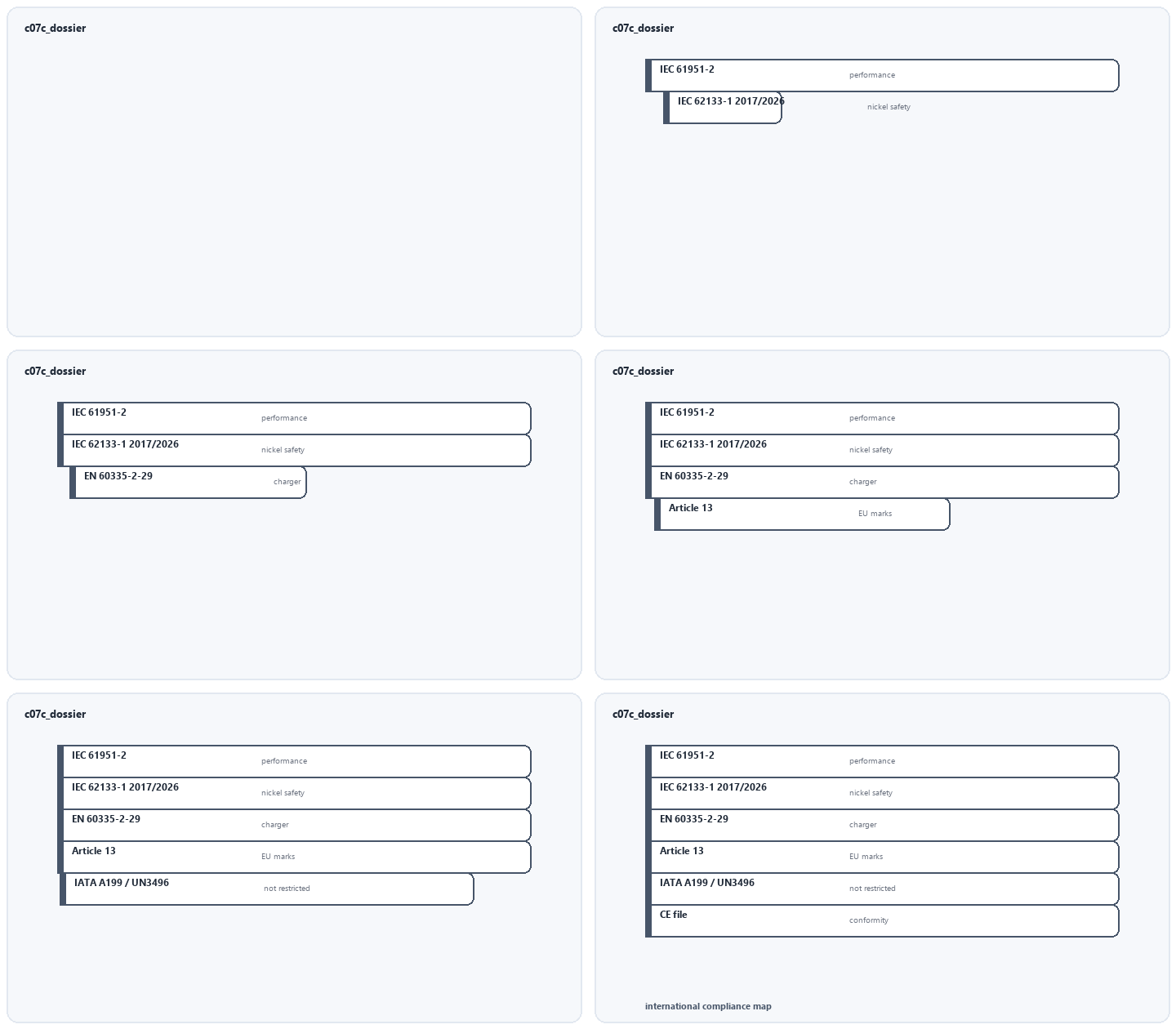
Beyond safety and transport, a consumer cell sold in the EU carries the Battery Regulation marks: the crossed-out wheeled-bin separate-collection symbol (from 18 August 2025, sized to at least three percent of the largest side up to five by five centimetres), chemical symbols where cadmium or lead thresholds are exceeded (a cadmium-free NiMH is below the 0.002 percent portable limit and so carries no Cd mark), the capacity label for rechargeable portable cells and, from 18 August 2026, the accompanying information duties; CE marking appears where applicable, and the not-restricted air shipment uses the appropriate transport documentation rather than a lithium mark. The animated dossier below assembles these layers in the order a customs officer or retailer checks them.
Put together, the map is straightforward but must be exact: IEC 61951-2 for performance, IEC 62133-1 (2017 or 2026 per market) for nickel-system safety, EN 60335-2-29 for the charger, Battery Regulation Article 13 marks on the artwork, CE documentation, and IATA A199/UN 3496 not-restricted packing guidance for freight. Keeping this package current as the 2025-2027 label dates and the 2026 standard edition arrive is a standing commercial advantage: goods that clear customs and retail onboarding without delay win replenishment orders from buyers who have been burned by competitors' incomplete dossiers.
Weijiang Power certifies consumer NiMH cells and packs to IEC 62133-1 (with 2026-edition transition support), pairs them with EN 60335-2-29 chargers, provides Article 13 label artwork and IATA A199 not-restricted packing guidance. Share your destination markets and we will map the exact dossier.


